The Business of Storytelling
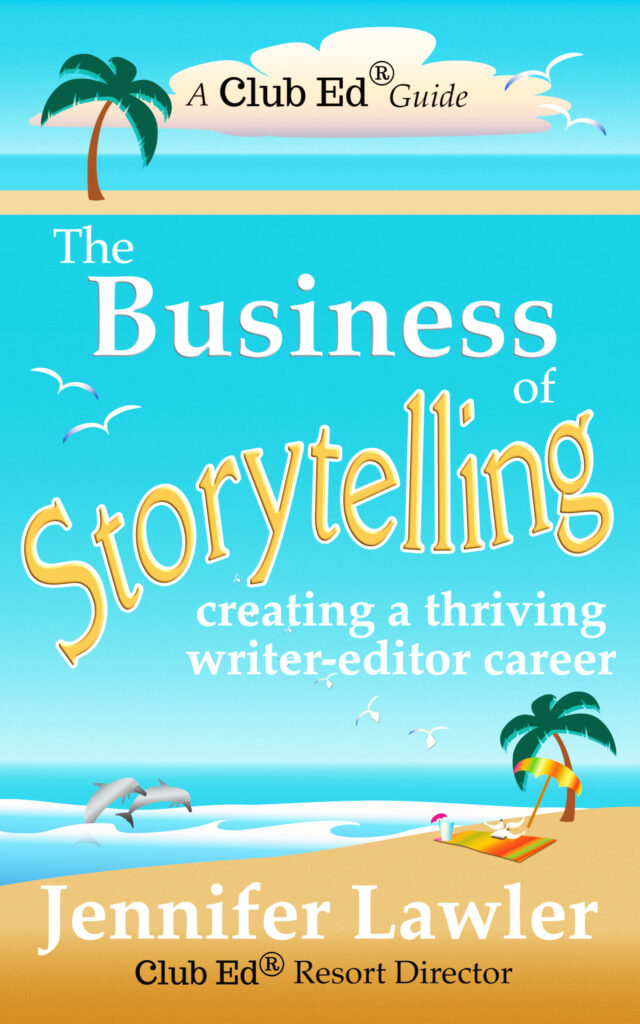
The Business of Storytelling Book Release
Newly released book The Business of Storytelling will help editors and writers expand their resources to bring in other streams of income.
If you’ve been in love with stories for a while, you’ve probably thought about making them the center of your working life. But if you’re also a realist, you know how unlikely it is to make a living from the stories you tell. And since you like to eat (or so I assume), you may have set that dream aside.
But I want you to take that dream off the shelf. You can make a living from your knowledge of writing—it’s just probably not in exactly the way you think.
The Business of Storytelling explores how to create a profitable writing-editing career, whether you’re a new graduate just entering the world of work, a midcareer professional looking to transition to Act 2, or a retiree looking for an income stream.
Veteran book author and editor Jennifer Lawler is your guide on this journey. For more than twenty years, she’s made a living as a writer-editor – with enough time left over to pursue her creative work.
Get your copy of The Business of Storytelling here.
Tips for Editors & Writers
-
Setting problems: lack of concrete locations
Writers often use setting like a painted backdrop to their stories, rather than as an integral element of their storytelling. As developmental editors, we can help them make the setting come to life. If we think of Wuthering Heights, we think of the Yorkshire moors. When we think of Moby Dick, it’s a whaler on
-
How Setting Can Reflect Character
Authors have a tendency to prefer focusing on character and/or plot at the expense of setting/world-building. (The exception is some SFF writers, who focus on setting and forget about plot and character.) So as editors we will often call that out and say something like, “Add a little description here. Otherwise it’s like Miles and
-
How to Identify Developmental Problems
Noticing a developmental problem (the pacing is slow, the character is inconsistently portrayed) is only the first step in the editing process. The next step is to explain why it’s a problem for this manuscript. This second step is one that most editors skip at first (and many editors skip forever) but it’s crucial for